
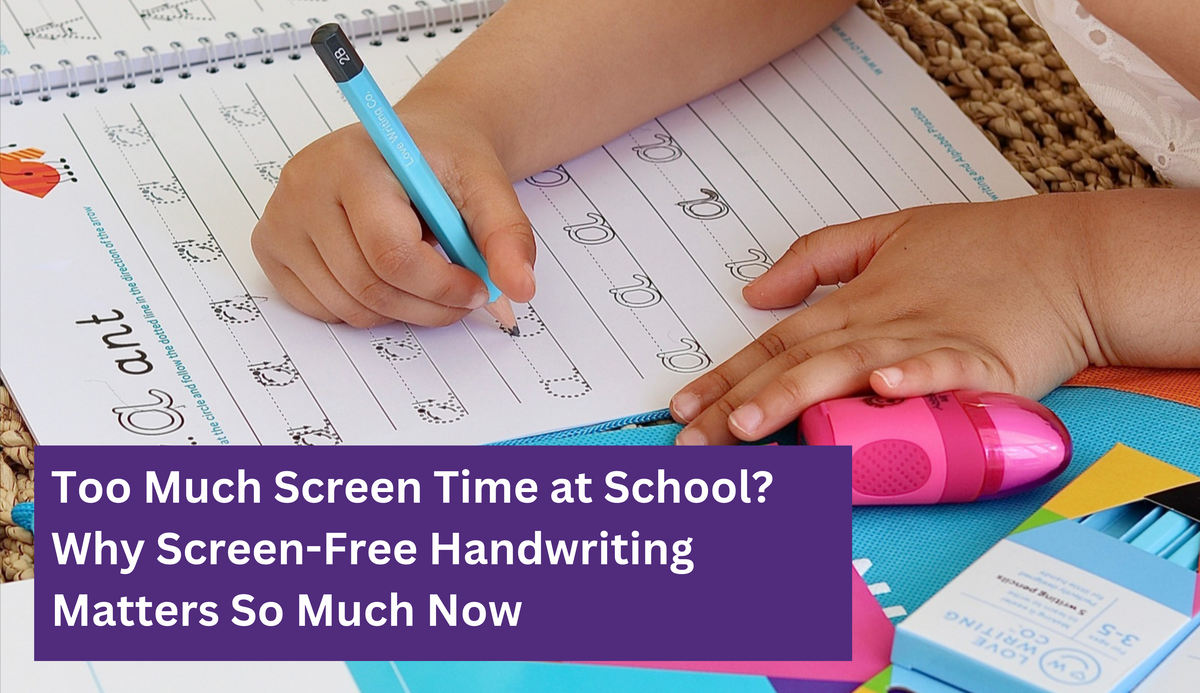
Screen time in schools is in the headlines this week. More than 150 doctors and health experts have written to the Education Secretary warning that children are spending too much of their school day on screens, and that it may be harming their speech, eyesight and learning.
If you are a parent wondering how much time your child spends on a tablet at school, or a teacher looking for ways to balance tech with hands-on learning, you are not alone. Here is what is being said, the questions it raises, and simple screen-free ways to support children as they learn to write.
What is happening with screen time in schools?
In a letter sent this week, more than 150 clinicians told the Government that the overuse of screens in classrooms has become a crisis. They are asking for two things:
- Safety standards for EdTech products used by children in school and for homework.
- Clear guidance on safe levels of screen time in schools, especially for children with special educational needs.
The clinicians stress that children learn language through rich, face-to-face conversation, something no screen can fully replace.
Screen time in schools: the numbers
- Around 960,000 UK pupils spend most of their lessons learning from screens, according to SafeScreens polling of 2,000 parents. That includes around 270,000 primary school children.
- Around £900 million a year is spent on education technology by UK schools.
- England’s school phone ban, introduced this summer, does not cover devices used for learning, such as tablets and laptops.
- Government screen time guidance for families recommends no more than an hour a day for 2 to 5-year-olds, but that advice is aimed at parents, not schools.
Why it matters: 194 missed conversations a day
A 2024 study found that more screen time was linked to children hearing fewer words and having fewer conversations with adults. Researchers estimated that 3-year-olds averaging just under three hours of screen time a day could be missing out on up to 194 back-and-forth conversations and 1,139 adult words every day.
Those everyday chats are how children build the language they need to read and write.
Schools are already changing course
Some schools are not waiting for new rules. Winchester College recently moved back to pen-and-paper learning, with its head arguing there was little sense in banning phones while handing pupils a laptop. In Western Australia, ten primary schools will trial cutting classroom screen time and using screen-free resources from 2027. Doctors say other countries that went all-in on screens are now rethinking it too.
Questions we should be asking...
- How much of a child’s school day is spent looking at a screen?
- Is homework mostly on an app or a tablet?
- Are children getting enough time to talk, play, draw and write by hand?
- What screen-free options does the school use, and what can be done at home?
Why handwriting builds skills a screen can’t
Learning to write by hand is about much more than neat letters. When a child holds a pencil and forms a letter, they are building fine motor skills, hand strength and control. They are practising focus and patience. And they are linking the shape of a letter to its sound, which supports early reading.
Tapping and swiping simply do not give little hands the same workout. That is why a good pencil grip, the right-sized tools and plenty of time with paper still matter, even in a digital world.

Screen-free learning resources for home and the classroom
At Love Writing Co, we were created by parents and teachers who wanted learning to write to be easier and more fun, with no screens and no struggle. Every one of our resources is designed to be used away from a screen.
- Handwriting practice books for ages 2 to 9, from first pre-writing marks to first letters and confident cursive.
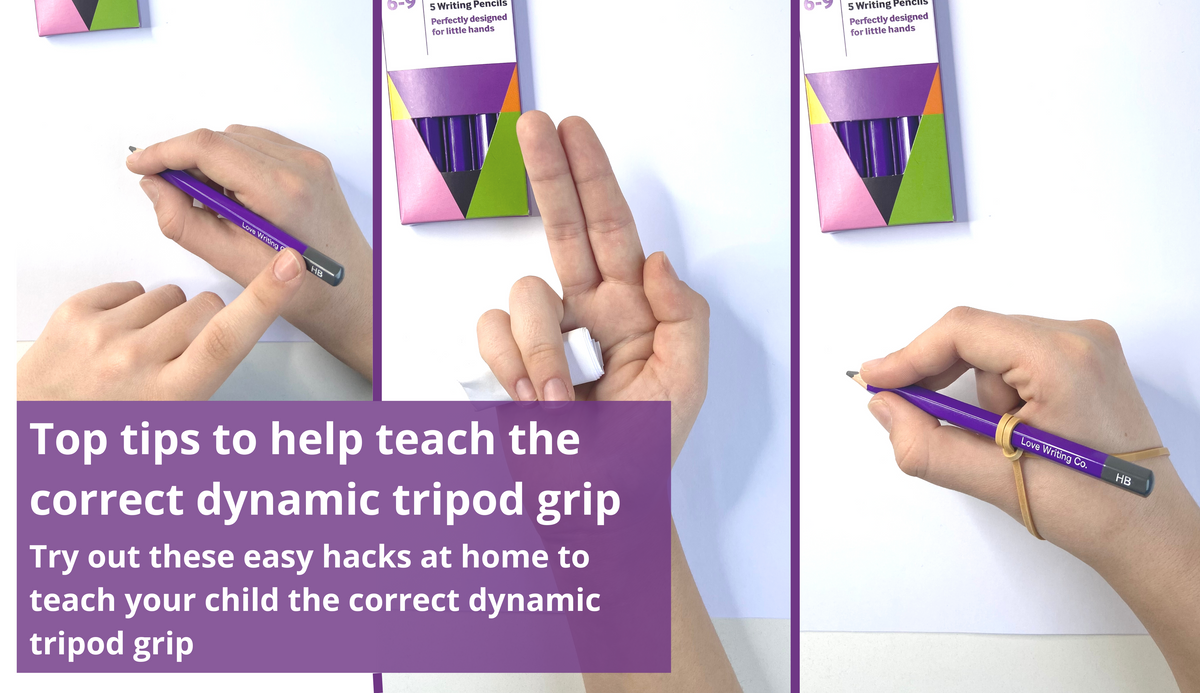
- Tripod grip pencils and colouring pencils sized for small hands, so children build the correct grip from the very first mark.
- Left-handed and SEND-friendly resources, approved by the British Dyslexia Association.
- Classroom resources for schools, tested in an independent study across 15 classrooms by Open Doors Therapy.
A few minutes a day with a pencil and a practice book can make a real difference to a child’s handwriting and Literacy confidence and give their eyes a break from the screen.
Shop all of our resources here, for ages 2 to 9.

Screen-free activities to try this week
- Swap one app-based homework task for a pencil-and-paper version.
- Set up a writing corner with a practice book, a chunky pencil and some colouring.
- Play letter games out loud: “I spy something beginning with…”, then trace the letter together on a phonics mat.
- Write a shopping list, a postcard or a thank-you note together.
Frequently asked questions
How much screen time should children have?
The World Health Organization advises no sedentary screen time for children under 2, and no more than one hour a day for 2 to 4-year-olds. UK guidance for families also suggests no more than an hour a day for 2 to 5-year-olds. There is currently no official screen time guidance for schools, which is what the doctors’ letter is calling for.
Is handwriting better than typing for learning?
Typing is a useful skill, but for young children handwriting does something extra. Studies have found that forming letters by hand helps children recognise letters and remember what they learn, and it builds the fine motor control they need for school. That is why handwriting practice still matters, even when screens are part of the school day.
What are good screen-free learning activities for kids?
Simple everyday activities work well: tracing and writing letters in a practice book, colouring, drawing, playing letter-sound games, reading together, and writing real things like lists, cards and notes. Little and often, around five to ten minutes a day, is better than one long session.
At what age should children start learning to write?
Most children begin with pre-writing marks such as lines, circles and zigzags from around age 2 to 3. They usually move on to forming letters at 3 to 5 as they start school, and develop joined-up handwriting from around 6 to 9. Every child is different, so follow their pace.
Are your resources suitable for left-handed children and children with SEND?
Yes. Our tripod grip pencils and practice books are designed for both right and left-handers, and our resources are SEND-friendly and approved by the British Dyslexia Association. See our left-handed and SEND pages for more.
Ready to go screen-free?
Explore our screen-free handwriting resources
Written by the Love Writing Co team, a group of parents and teachers on a mission to make learning to write quicker, easier and fun for every child.

Sources
- Screens in class damaging children’s speech and eyesight, doctors warn (October 2026)
- SafeScreens: One million pupils spending nearly every lesson on a screen (June 2026)
- Brushe et al., JAMA Pediatrics
- World Health Organization: guidelines on physical activity, sedentary behaviour and sleep for children under 5
- ABC News: WA primary school students to have less classroom screen time (October 2026)
- Department for Business and Trade

Leave a comment
All comments are moderated before being published.
This site is protected by hCaptcha and the hCaptcha Privacy Policy and Terms of Service apply.