
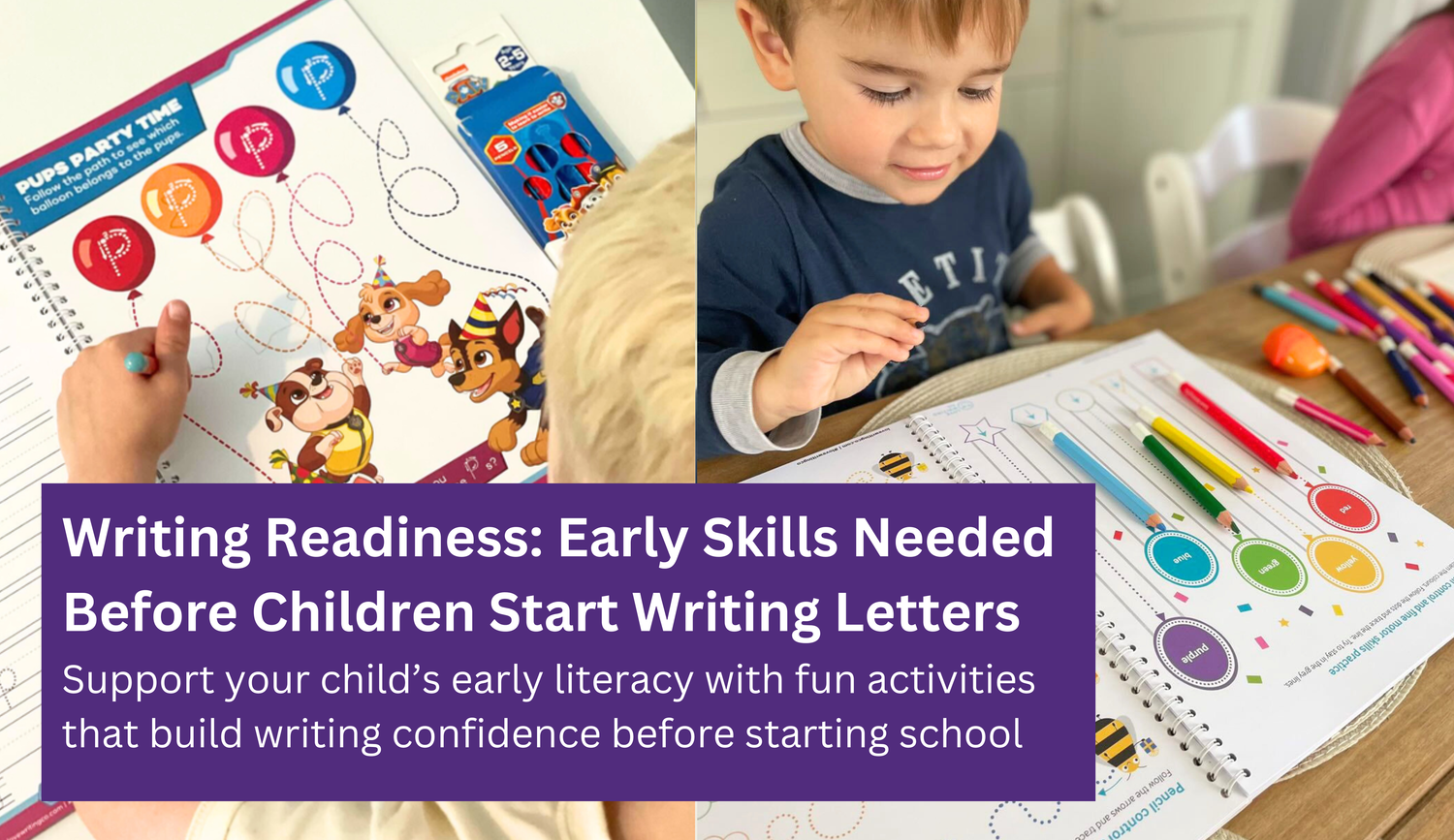
Watching your little one begin their writing journey is such a special milestone!
If your child is starting school for the very first time and you’re looking for simple, supportive ways to help them learn the basics, this guide is here to give you confidence, ideas and reassurance as they take those exciting first steps into early writing.
Before children begin confidently writing letters and words, there’s so much learning happening behind the scenes first. Every child develops at their own pace, and there’s no “perfect” age to start. If you’ve been wondering whether your little learner is ready to begin pre-writing activities, here are some common signs to look out for plus easy, low-pressure ways you can support them at home
1. They Enjoy Mark Making
One of the very first signs that your child is getting ready for writing is showing an interest in mark making.
This might look like:
- Scribbling with crayons or pencils
- Drawing lines, circles and simple shapes
- “Writing” shopping lists, cards or notes during play
- Copying marks they see adults making
- Asking to colour, draw or use pens regularly
Even though these early scribbles may not look like letters yet, they’re actually an incredibly important part of early writing development. Through mark making, children begin to understand that marks, symbols and drawings can have meaning and be used to communicate ideas.
2. They Can Hold a Pencil or Crayon Comfortably
Another early sign your child is getting ready for writing is showing more confidence when holding drawing tools. At first, this often starts with large crayons, chunky chalks or thick markers that are easier for little hands to grip and control. You may notice your child enjoying mark making, scribbling, colouring, or beginning to copy simple lines and shapes.
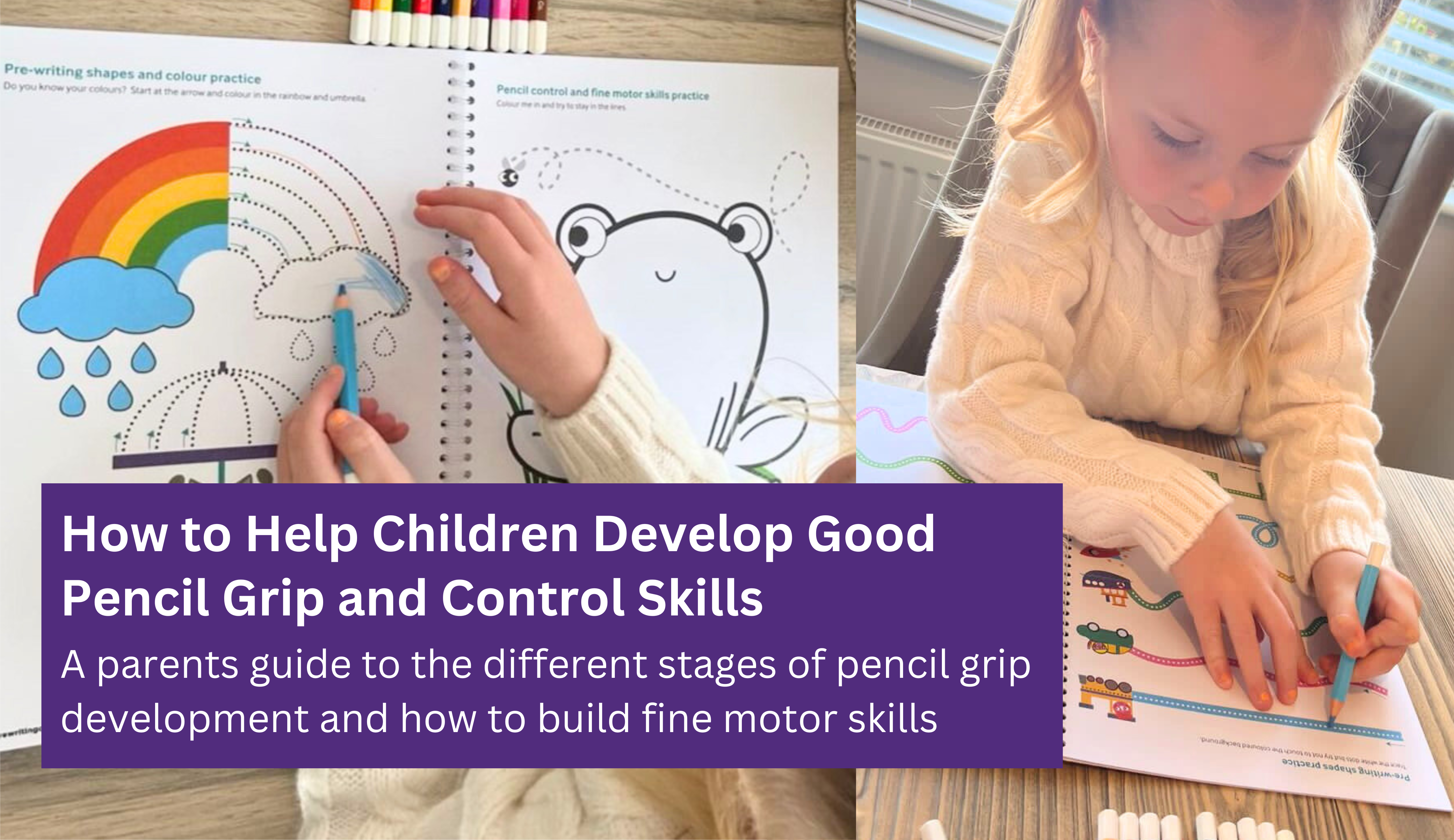
At this stage, children don’t need a perfect pencil grip - that develops gradually over time through regular play and fine motor practice. What’s most important is giving them opportunities to strengthen the muscles in their hands and fingers while building confidence and control naturally.
Activities like tracing, colouring, sticker play, playdough and pre-writing exercises all help support the development of pencil control and the correct dynamic tripod grip needed for handwriting later on.
If you’d like to learn more, check out our blog on the different stages of pencil grip development and discover simple ways to support your child’s handwriting journey at home.
3. They Can Follow Simple Lines And Shapes
Before children are ready to form letters, they first need to develop control through simple pre-writing shapes.
This includes practising tracing lines, shapes, curves, zig zags, circles and shapes, all of which help build the coordination and pencil control needed for future handwriting. You may notice your child beginning to trace lines more carefully, follow paths with their finger or pencil, or take more time when colouring and drawing.
Our pre-writing skill ages 2+ resources are designed to make this stage fun, engaging and pressure-free, helping children build confidence naturally through play-based learning. you can also use code BLOG10 for 10% off across our website.


4. Their Fine Motor Skills Are Developing
Before children can confidently control a pencil, they first need to build strength, coordination and stability in the small muscles in their hands and fingers. A lot of this development actually happens through everyday play activities.
You may notice your child enjoying things like playdough, puzzles, building blocks, threading activities, sticker play or using child-safe scissors. All of these are fantastic ways to help children strengthen their fine motor skills and improve pencil grip and control ready for writing.
These types of activities help children develop the coordination needed for pencil grip, line control and later handwriting, while still feeling fun and pressure-free.
If you’re looking for extra ways to support fine motor development at home, don’t forget we also offer FREE printable craft activities designed to encourage fine motor skills, pencil control and hands-on learning through play
5. They’re Interested In Letters And Their Name
There’s something so special about the moment your child learns to write their own name. Seeing those first recognizable letters appear on paper is such a proud milestone for parents, not just because they’re learning to write, but because it’s a huge sign of growing confidence, independence and development. It’s one of those little moments you’ll always remember!
At this stage, the goal isn’t perfect handwriting…it’s building confidence, familiarity and enjoyment around early writing in a fun and stress-free way. One of the best ways to encourage this is through playful name activities woven into everyday learning. Simple activities can make such a big difference while still feeling exciting and engaging for little learners.
Some fun ideas to try at home include:
- Creating a personalised bedroom door sign
- Writing their name in sensory trays using sand, rice or shaving foam
- Building their name with playdough letters
- Painting or colouring large bubble letters
- Using stickers to trace over their name
- Practising name tracing with wipe-clean activities
- Making birthday cards or drawings and “signing” their name
These small, playful activities help children become more confident recognising and forming the letters in their name while strengthening the fine motor skills needed for writing later on.
6. Helping Your Child Build Early Writing Skills At Home
When it comes to learning to write, the little things really do make the biggest difference!
Simple everyday activities help children strengthen the fine motor skills, pencil control and confidence needed before they’re ready to start writing letters independently. Try:
- Drawing with chunky chalk outdoors
- Painting with cotton buds or fingers
- Writing in shaving foam or sand trays
- Water painting on walls or patios
- Sticker tracing activities
- Drawing roads and tracks for toy cars
- Making shopping lists during role play
- Fun activity workbooks
Our resources are designed to make early writing practice feel fun, easy and completely pressure-free for little learners. Learn to write with their favourite characters and shop our Paw Patrol or Paddington handwriting sets for children ages 2, 3, 4, 5 years old to help children love learning to write from the very beginning. We’re here to help support every stage of your child’s handwriting journey at home.
6. Left Handed Writing Tips
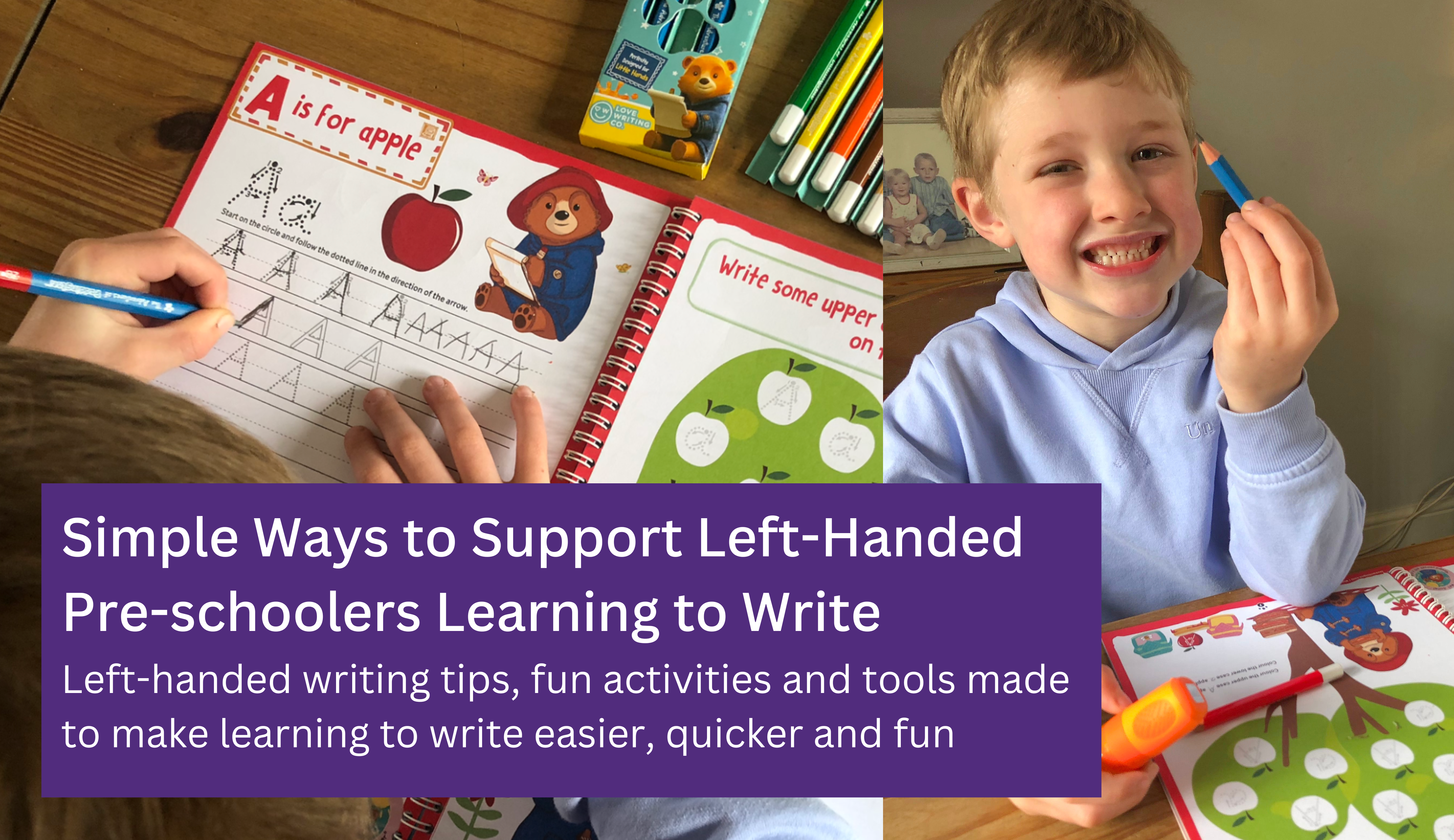
If your child is left-handed, learning to write can sometimes feel a little more challenging at first and that’s completely normal! Simple adjustments like paper positioning, pencil grip support and left-handed friendly resources can make a huge difference in helping children feel more comfortable and confident while writing.
We know how important it is for every child to feel supported while learning to write. That’s why our left-handed handwriting resources are specially designed to help left-handed children develop pencil control, letter formation and confidence in a way that feels natural and comfortable for them
If you’d like more support, check out our blog on left-handed writing practice tips and free downloadable left handed guides for parents
Every child’s writing journey looks different, and readiness develops gradually over time. The most important thing is creating positive early experiences that help children feel confident, capable and excited to learn.
By encouraging fine motor play, pencil control and pre-writing practice little by little, you’re helping build the strong foundations children need for future handwriting success.
Explore our full range of early learning and pre-writing resources at Love Writing Co. and help your little learner grow in confidence one page at a time. Don't forget you can also use code BLOG10 for 10% off across our website!
We hope this blog has helped you feel more confident recognising the early signs of writing readiness and given you some fun, simple ways to support your child’s learning at home. Wishing you and your little learner lots of confidence, progress and special moments throughout your early writing journey ✏️🥰

Leave a comment
All comments are moderated before being published.
This site is protected by hCaptcha and the hCaptcha Privacy Policy and Terms of Service apply.