
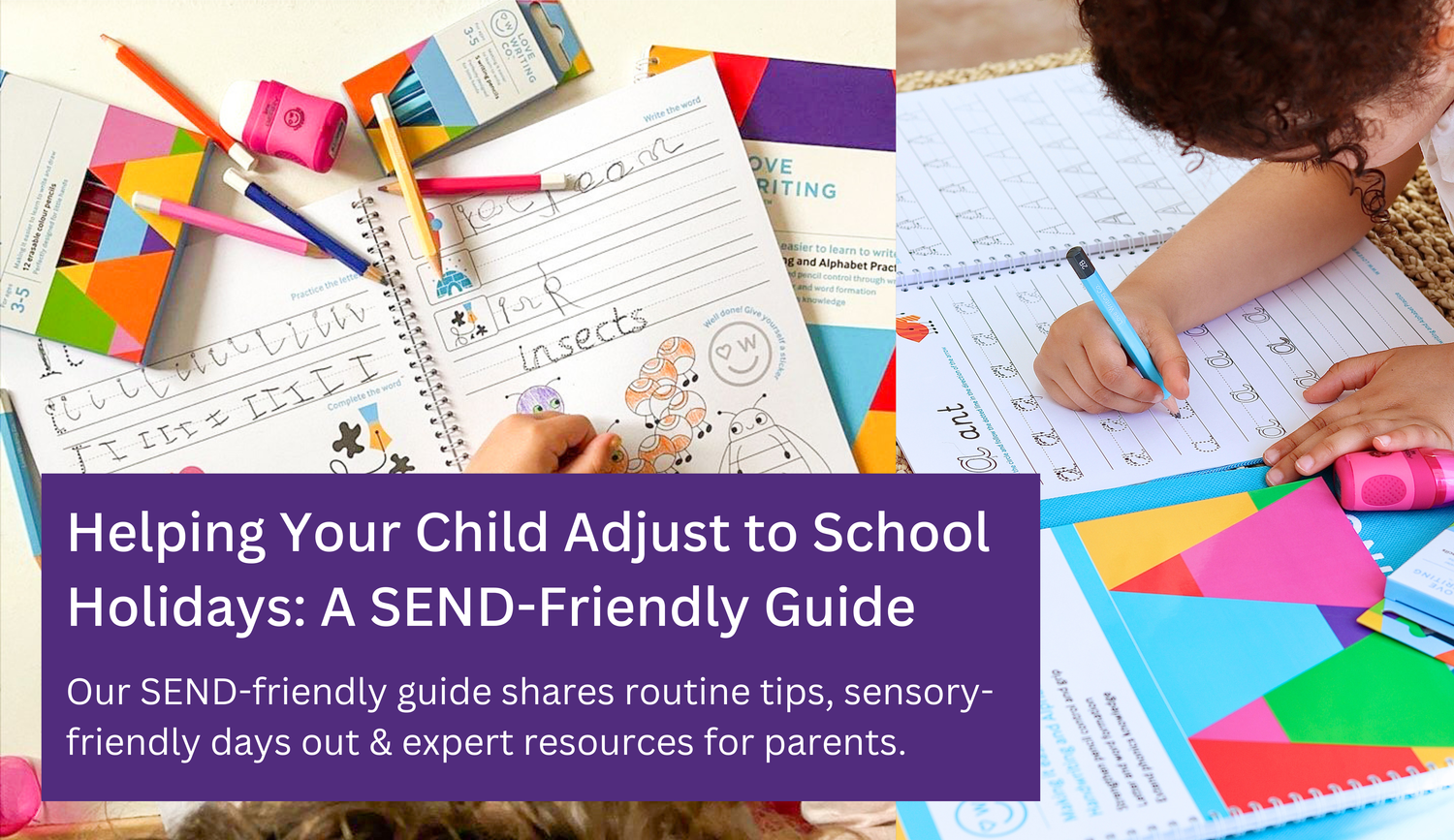
The last bell rings, the book bags come home and six weeks of freedom stretch out ahead. For most kids, that's pure joy. For a lot of families, in particularly families with children with SEND, it can start to feel a bit daunting, the thought of keeping the children entertained, engaged and enjoying the holidays every day can feel like a lot.
No more timetable. No more familiar faces. No more knowing exactly what happens after lunch… and for a child who relies on routine to feel safe, that loss of structure can show up as anxiety, meltdowns, or just a really hard time settling into anything at al without normal routine.
The good news? You don't need a perfectly planned summer to make this easier. You just need a few small, steady anchors. Here's how to build a summer that still feels safe, plus some genuinely brilliant SEND-friendly places to visit and real support if you need it.
Why the Summer Holidays Can Be Hard for SEND Children
School gives children something incredibly reassuring: predictability. The same wake-up time, the same corridor, the same faces, the same structure to the day. When that disappears overnight, it's not just “less to do”, for many SEND children, particularly autistic children and those with ADHD, it's a genuine loss of the framework that helps them feel in control.
Children with autism often find unpredictability one of the hardest things to manage and unstructured time can be more distressing than exciting. Children with ADHD, on the other hand, may struggle in the opposite direction - without planned activity, boredom and restlessness can build quickly, which can amplify impulsivity.
Either way, the message is the same: routine isn't a “nice to have” over the summer. For a lot of SEND families, it's the thing that makes the holidays actually enjoyable rather than something to just get through. We have lots of parents within our community who have shared how crucial routine has been and is going to be for them during the holidays.
How to Build a Summer Routine That Actually Works
You don't need to recreate the school day hour by hour. You need a rhythm your child can predict. A few things that genuinely help:
• Keep the big anchors the same if you can as much as possible. Wake-up time, mealtimes and bedtime are the three that matter most. Keeping these consistent does a lot of the heavy lifting, even if everything in between is more relaxed.
• Give shape to “nothing planned” days. A day with no plan at all can feel more unsettling than a busy one. Even a loose visual plan; breakfast, morning activity, lunch, quiet time, outdoor time - gives your child something to hold onto.
• Use visual timetables. A simple picture schedule can really help – try sticking this on the fridge or somewhere they can clearly see, calendar, or checklist helps your child see what's coming next without having to ask (or worry). This is something occupational therapists and SEND specialists recommend again and again.
• Build in a “quiet time” every single day. One consistent, calm, screen-free slot - for mark-making, drawing, or writing practice — gives your child a predictable moment to regulate, away from stimulation. Many parents build this around handwriting practice or colouring, since it's calming, low-pressure and genuinely productive. Our resources can be a great help, take a look at our screen-free activity packs currently with a summer discount on and big savings to support screen-free summer learning over the holidays to help prep for the new school year.
• Prepare for changes in advance. If something different is happening – whether this is a day out, a visitor, a new activity - talk it through beforehand. Photos, simple explanations or a visual countdown all help reduce anxiety around the unexpected.
• Don't aim for perfect. Aim for predictable. Some days won't go to plan. That's fine. Consistency over time is what builds a sense of safety, not one flawless day.
How Love Writing Co can help: A lot of families use a short, screen-free writing or mark-making session as their daily anchor — the same calm slot, every day, that doesn't rely on the weather, a venue, or anyone else being available. Our handwriting and pre-writing packs are designed specifically with little hands and different needs in mind, with tools scaled to fit correctly and support a comfortable, tripod grip. Our SEND & left-handed friendly range is British Dyslexia Association assured, and was built with feedback from parents of children with dyspraxia, dyslexia and Down syndrome - so our resources are genuinely made to reduce frustration, not add to it. It's a small, calm 15 minutes that becomes part of the routine itself.
SEND-Friendly Days Out This Summer
When you are ready for a change of scene, plenty of UK attractions now go out of their way to be genuinely welcoming for SEND families - think quieter hours, sensory kits and staff who understand.
• Merlin attractions (Alton Towers, Legoland, Chessington World of Adventures, Thorpe Park) offer free ride access passes for guests with additional needs, and some locations have ear defenders available to borrow.
• National Trust sites — over 500 across the UK — increasingly offer sensory resources like fidget toys and ear defenders at selected properties, alongside wide open outdoor spaces that are naturally lower in stimulation.
• Zoos and safari parks, including Twycross Zoo and London Zoo, often provide sensory bags, accessibility guides and queue-hopper passes, with free carer admission at many sites.
• Autism-friendly cinema screenings run monthly at ODEON, Cineworld, Vue, Showcase and Everyman, with lower lighting, reduced sound and freedom to move around.
• Local libraries and museums are an underrated win — free entry, quieter than a theme park, and many now run sensory-friendly sessions or quiet hours during the school holidays.
• SENScout is a free UK-wide directory rating venues on noise, lighting, crowding and sensory hours — genuinely useful for checking somewhere out before you commit to a day out.
Small tip: whatever you visit, a quick look at the venue's accessibility page the night before (and a photo or two to show your child) does a lot to soften the unknown.
Trusted Information & Support for SEND Parents
If routine changes are hitting hard this summer, you're far from alone and there's real support out there, not just for your child, but for you too.
• Contact — a national charity for families with disabled children, offering a free helpline and advice on education, benefits and family life.
• National Autistic Society — in-depth, practical guidance on managing routine change, sensory differences and days out.
• IPSEA — free, independent advice on EHCPs, school issues and SEND law, if you're navigating support for September too.
• Scope — advice on disability, benefits and everyday family life.
Bookmark one or two of these now, so they're there if you need them you have them ready and can feel prepared as a parent too to help support you through the holidays aswell.
Making September Feel Less Far Away
One more thing worth saying: the summer holidays aren't just about getting through six weeks - they're also a runway into the new school year. Keeping a little writing practice ticking over, even just a few minutes a day, means your child heads back to the classroom with confidence rather than starting from scratch. Our free downloadable activity packs are a great screen-free way to keep that going without it feeling like “homework.” You can sign up for free, download your activity sheets and packs and use them as often as needed throughout the days to support screen-free activities to keep them engaged, entertained and learning.
FAQs: School Holidays and SEND Children
Why do school holidays affect SEND children so much?
Many SEND children rely on routine and predictability to feel safe. The sudden loss of school structure over the summer can lead to increased anxiety, meltdowns or difficulty settling, particularly for autistic children and those with ADHD.
How can I create a summer routine for my SEND child?
Keep wake-up, meal and bedtime consistent, use a visual timetable, build in one predictable quiet activity every day, and prepare your child in advance for anything different that's happening that day.
Are there sensory-friendly days out in the UK?
Yes — many major attractions including Merlin theme parks, National Trust sites, zoos, cinemas and museums now offer sensory kits, quiet hours or free companion access. Directories like SENScout can help you check a venue before you go.
What screen-free activities help with routine and regulation?
Calm, repetitive activities like handwriting practice, colouring or mark-making are widely recommended as a screen-free way to help children regulate, especially when done at the same time each day.
Explore our SEND & left-handed friendly writing tools, designed to make writing time calmer, easier and genuinely enjoyable — all summer long and beyond.
We are here to help. Feel free to message our team at info@lovewritingco.com for any product recommendations for your child’s age and ability and we’d be happy to help. Sign up to our free newsletter for more helpful hints, tips and educational advice all year around.


Leave a comment
All comments are moderated before being published.
This site is protected by hCaptcha and the hCaptcha Privacy Policy and Terms of Service apply.