
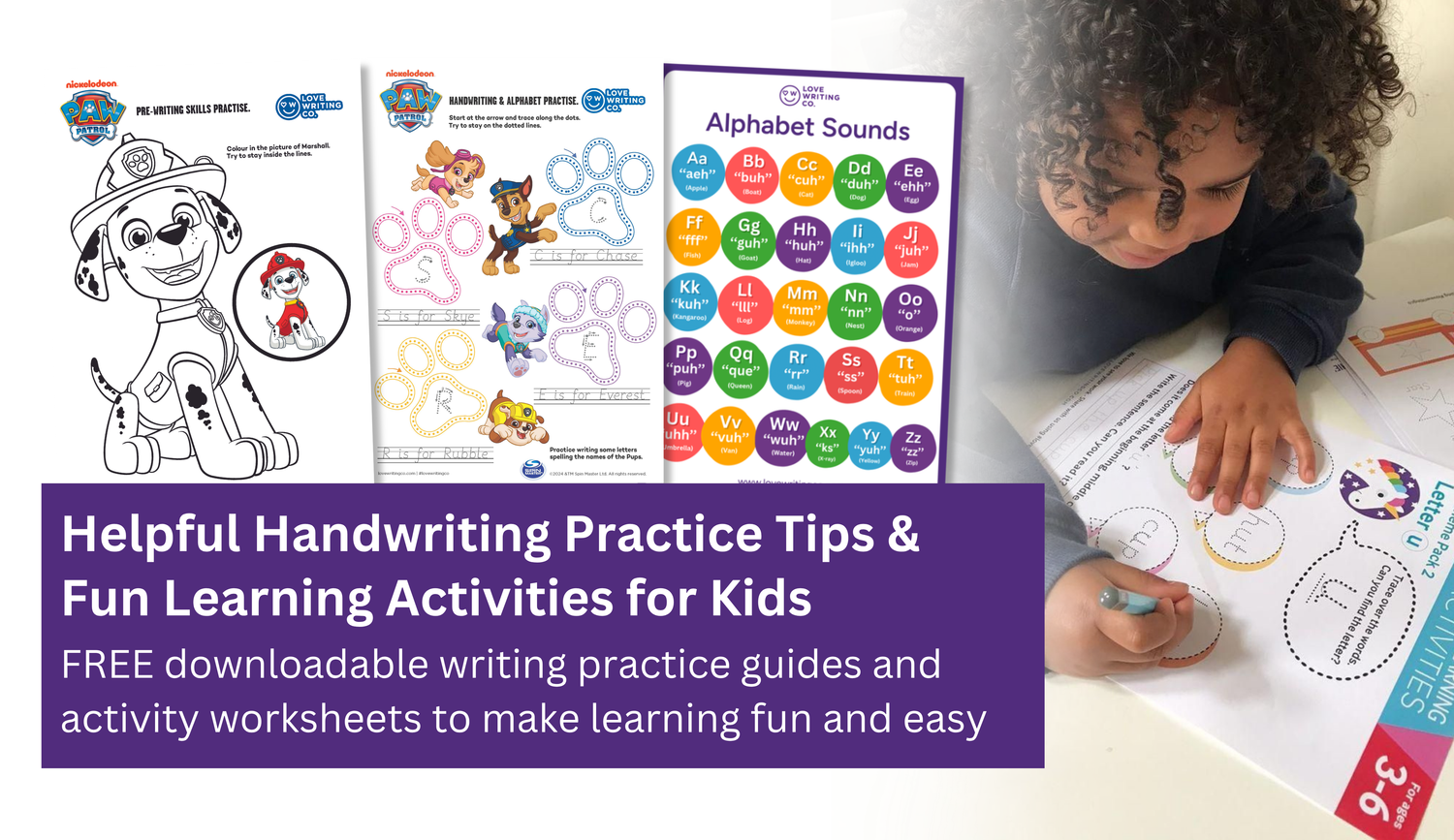
Supporting your child’s handwriting journey from a young age doesn’t have to feel overwhelming. In fact, for little ones in the early stages, handwriting is less about perfect letters and more about building confidence, coordination, and having fun along the way.
In these early years, every scribble, swirl, and mark is an important step toward developing strong writing skills. Here are some simple, practical tips to help your child get started!
Mark-making and developing fine motor skills
At this age, children learn best through play. Before focusing on forming letters, encourage activities that build fine motor skills.
Try:
- Drawing with crayons or chalk
- Playing with playdough
- Using stickers or threading beads
These activities strengthen the small muscles in the hands and fingers, which are essential for handwriting later on.
You can also introduce early mark-making using our Pre-Writing Skills Activity Books, these are designed to introduce different shapes, lines and patterns to help children learn basic pencil strokes before learning to write letters of the alphabet. Learning with their favourite characters with fun activities on every page feels fun and engaging rather than structured or overwhelming.

Encourage the Correct Pencil Grip Early
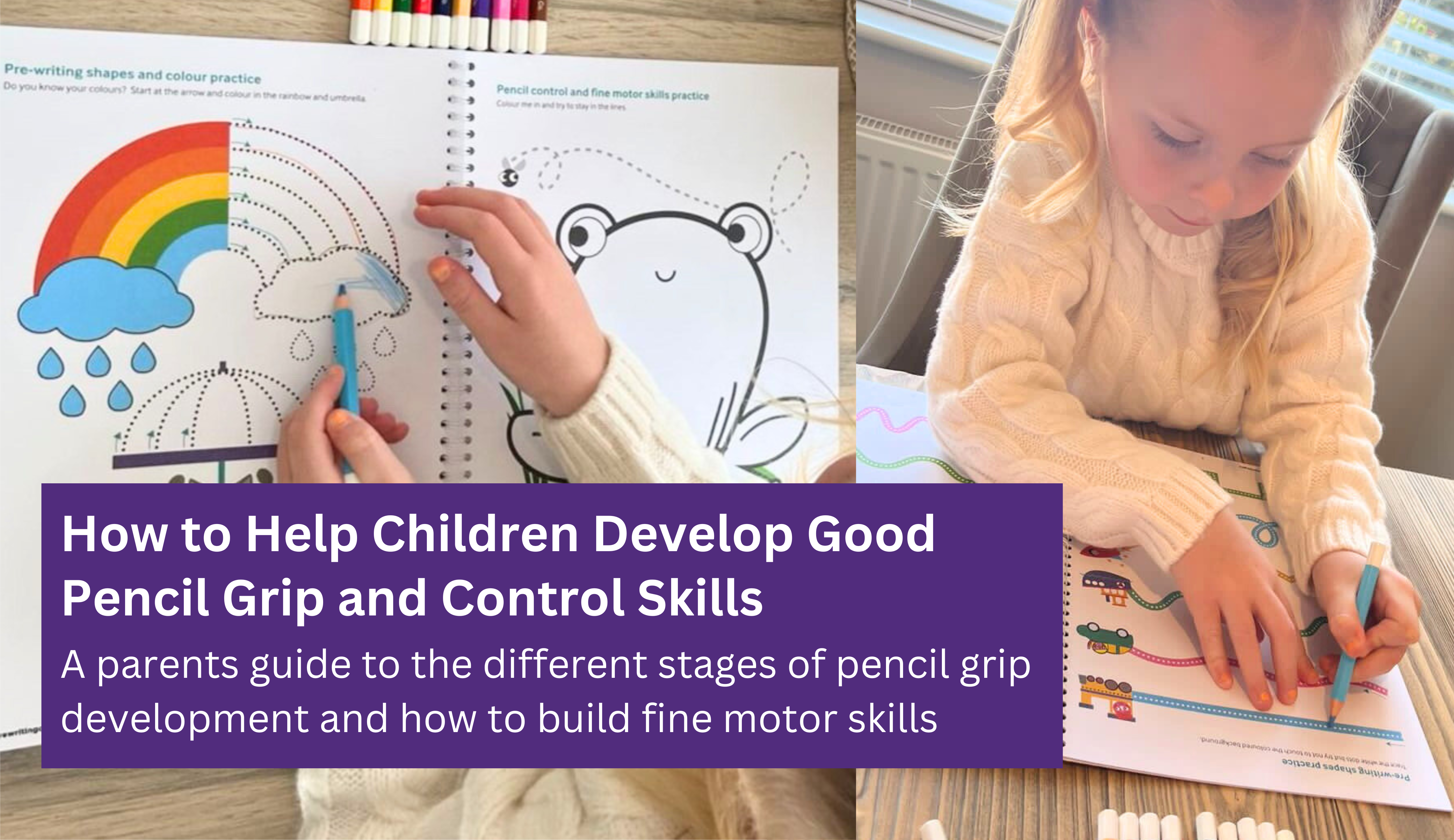
One of the most helpful things you can do early on is support your child in developing a comfortable and effective pencil grip.
The tripod grip using the thumb, index, and middle finger helps children gain better control and reduces strain as they begin to write.
To encourage this:
- Use shorter pencils or crayons
- Gently guide their fingers into position
- Keep practice sessions short and relaxed
Our tripod grip pencils are specially designed to support little hands, making it easier for children to naturally hold their pencil correctly without frustration.
Top tip: If you’d like extra support, our free tripod grip tips guide offers simple, step-by-step advice to help your child build this skill with confidence.

Make Letter Learning Fun and Phonics-Based
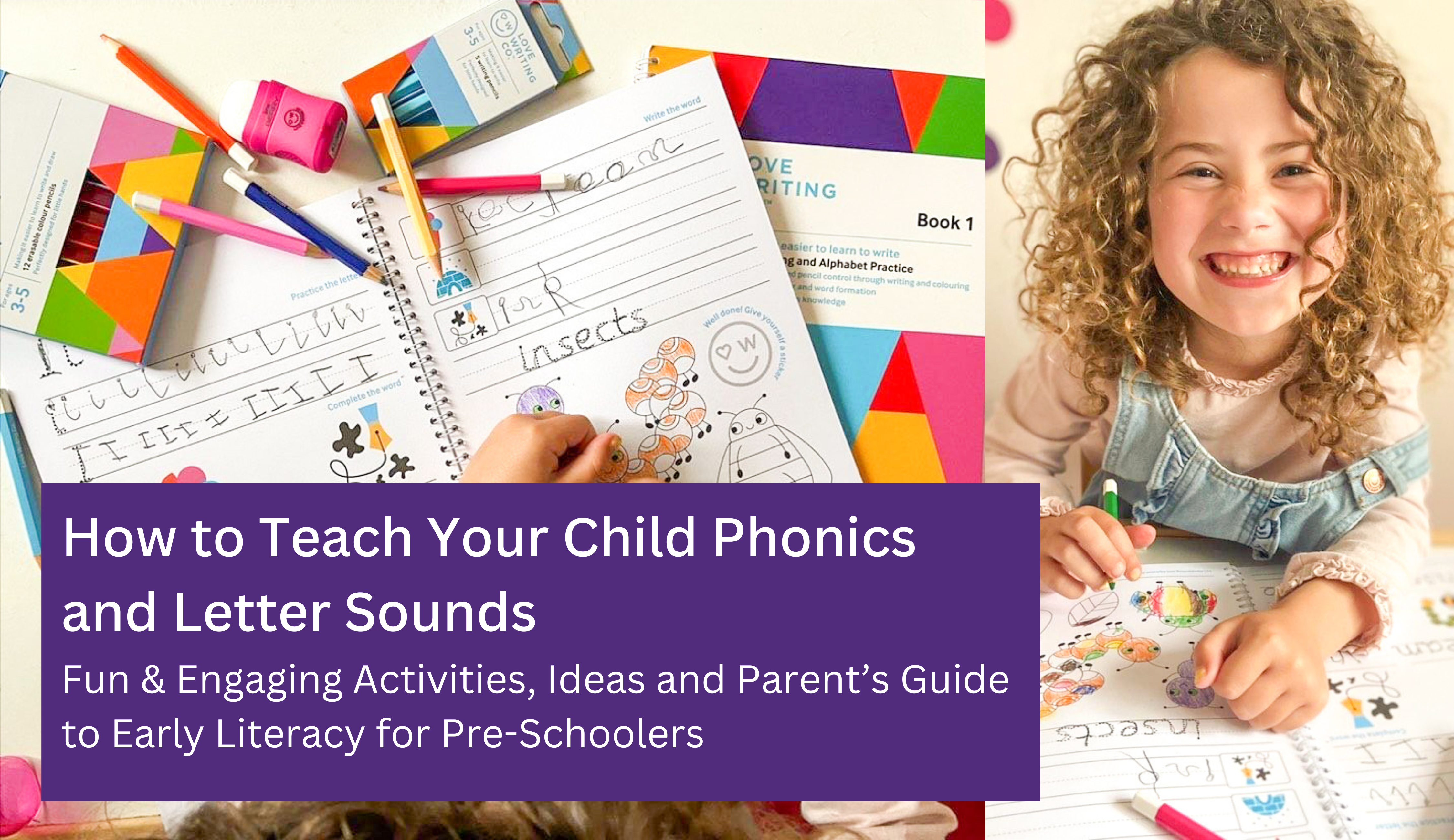
Before children can write letters, they need to understand the sounds behind them. This is where phonics plays an important role.
Instead of just teaching letter shapes, try linking letters to sounds:
- Say the sound as you write the letter
- Use songs or rhymes
- Practice spotting sounds in everyday words
Our free phonics guide includes a helpful phonics chart and introduces phonemes in a clear, child-friendly way. It’s a great way to support both early reading and writing skills, helping children learn how to form letters and begin decoding simple words.
Support Left-Handed Writers
If your child is left-handed, a few small adjustments can make a big difference to their comfort and confidence.
Helpful tips include:
- Positioning the paper slightly to the left
- Encouraging a relaxed wrist position
- Ensuring good lighting so they can see clearly
Our free left-handed handwriting guide provides practical advice tailored specifically for left-handed children, helping them develop their skills without frustration.
Focus on Big Movements First
Young children benefit from starting with large movements before moving on to smaller, more controlled writing.
Try:
- Drawing big shapes in the air
- Using pavement chalk with water outdoors
- Practising tracing pre-writing skills (lines, shapes and patterns)
These activities help children build control and coordination, making it easier to transition to smaller letter formation later.
Keep Practice Short and Positive
At ages 2–5, attention spans are still developing, so short, regular practice is far more effective than long sessions.
Aim for:
- 5–10 minutes at a time
- Lots of praise and encouragement
- A focus on effort, not perfection
The goal is to build confidence and enjoyment - not to achieve perfect handwriting straight away.
Handwriting is a journey, and every child develops at their own pace. By keeping things playful, supportive, and pressure-free, you’re giving your child the best possible start.
Don’t forget to explore our free fun handwriting activities and handwriting guides, including:
- Left-handed handwriting support
- Phonics learning and letter formation
- Tripod grip tips and tricks
- 50+ FREE handwriting activity worksheets
These resources are designed to make supporting your child simple, practical, and enjoyable, every step of the way.

And there you have it... a little inspiration to carry with you on your writing journey. Whether you’re putting pen to paper for the first time or encouraging reluctant writers to love to write, remember that every small step matters. Progress doesn’t have to be perfect!
Thank you so much for taking the time to read...Love from all of us at Love Writing Co.
Happy writing ✨🖊️

Leave a comment
All comments are moderated before being published.
This site is protected by hCaptcha and the hCaptcha Privacy Policy and Terms of Service apply.