
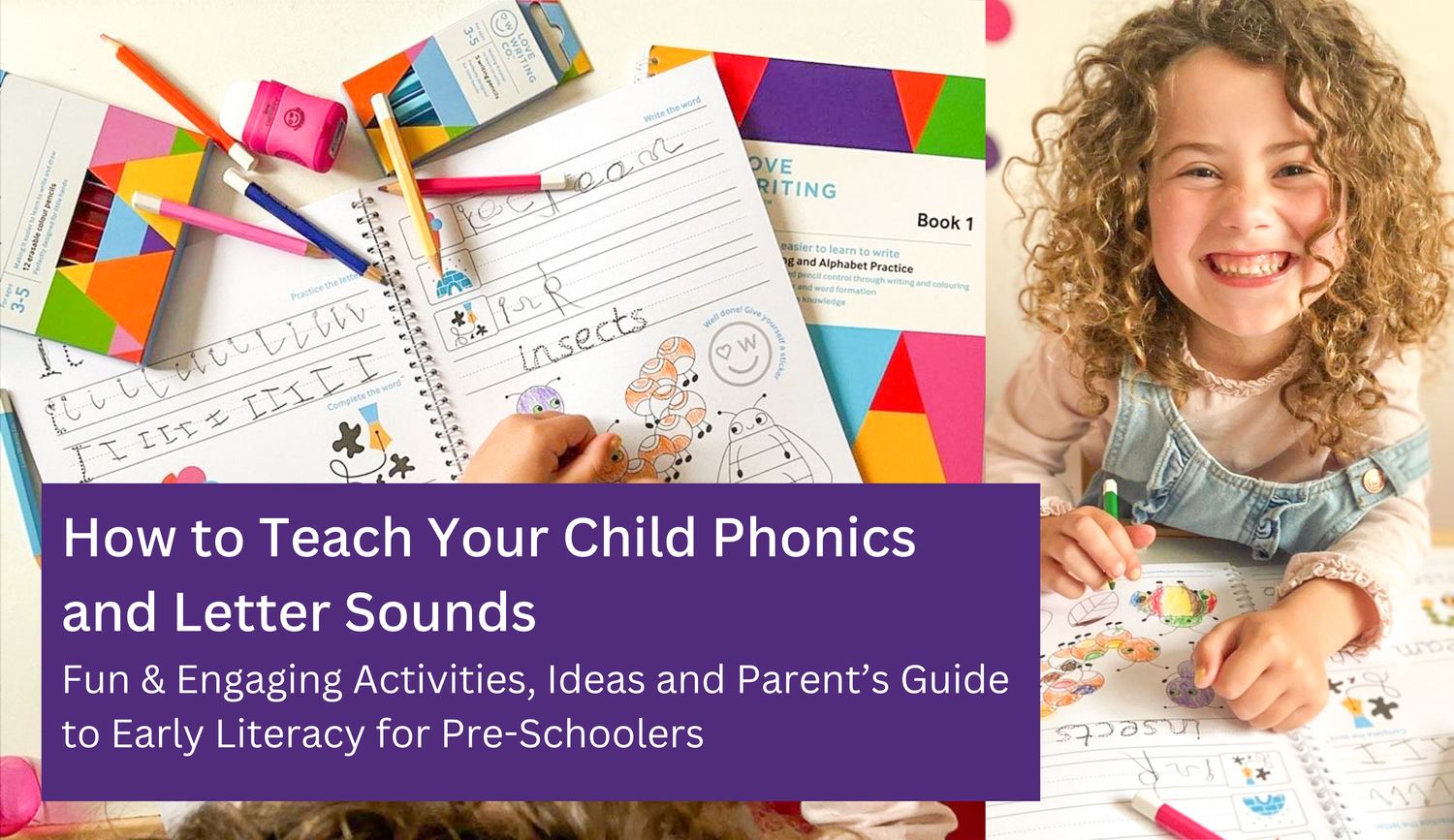
Teaching your child the alphabet and phonics is one of the most rewarding early learning experiences you can share together. These foundational skills set the stage for reading, writing, and a lifelong love of language. But how do you start? How do you keep it fun and effective without overwhelming your child? This blog will walk you through age-appropriate strategies and fun activities to introduce the alphabet and phonics at home.
1. Start with the Alphabet: Letter Recognition First
Before diving into sounds, help your child become familiar with the names and shapes of letters.
- Sing the ABC song together - often and with enthusiasm.
- Use alphabet books with large, colorful letters.
- Play with magnetic letters on the fridge or use letter puzzles.
- Focus on a few letters at a time - especially those in your child’s name.
- Encourage letter hunting: “Can you find the letter A on this cereal box?”
Our Learn How to Write and Draw the Alphabet activity workbook offers a fun, hands-on approach to early literacy. Rather than simply memorising letters, children are guided through fun drawing and colouring activities, which help them visually and physically connect with each letter of the alphabet. This multi-sensory approach supports stronger letter recognition while keeping learning playful and enjoyable.

3. Make It Multi-Sensory
Children learn best when multiple senses are engaged.
Activities:
- Touch and trace: Use sandpaper letters, or trace letters in shaving cream or sand.
- Craft letters with playdough or draw them with sidewalk chalk.
- Clap it out: Clap the syllables or sounds in simple words.
3. Introduce Letter Sounds: Phonics Basics
Once your child recognizes letters, introduce the sounds each letter makes.
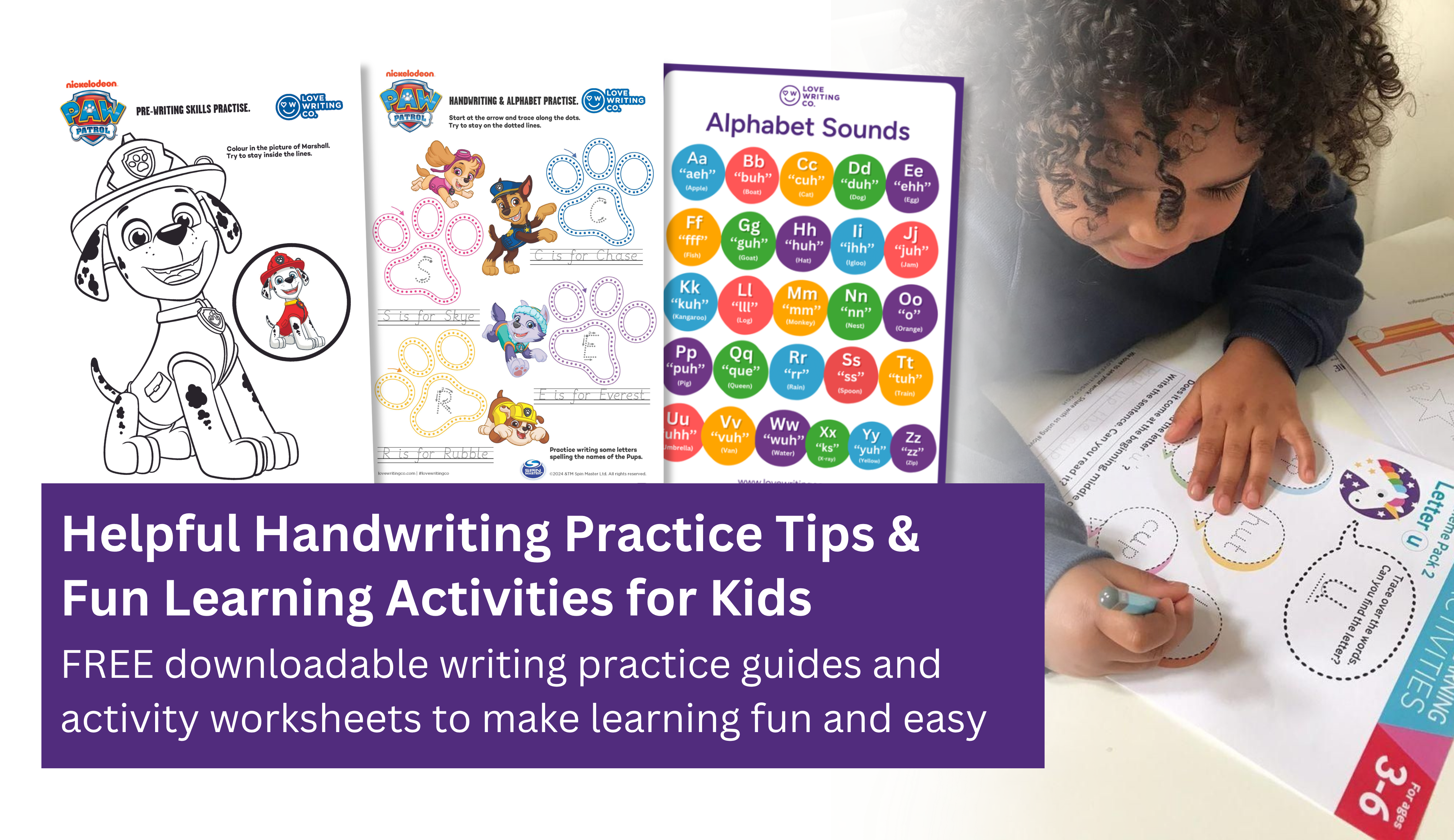
- Sound games: “What sound does ‘B’ make?” (say “buh”) and think of words like “ball” or “banana.”
- Use phonics songs like “The Phonics Song” (e.g., “A says ah, A says ah…”).
- Flashcards or posters with a picture and sound (“D is for Dog – duh!”).
- Read simple alphabet books that emphasize sounds.
4. Build on Progress: From Letters to Blending
Once your child knows a few sounds, try blending them into simple words (like “c-a-t”). Use word families (cat, hat, mat) to build confidence and fluency.
5. Don’t Rush - Follow Their Lead
Every child learns at their own pace. Some may grasp letters quickly; others need more time and repetition. Celebrate small wins and be patient.
Look for signs of readiness:
- Interest in books and letters.
- Trying to “read” signs or labels.
- Asking questions about words.
Teaching your child the alphabet and phonics doesn't have to feel like a lesson - it can be a natural, joyful part of everyday life. With consistent practice, encouragement, and lots of play, you'll help your child become a confident and curious early reader. Remember: the goal isn't perfection - it's progress, interest, and fun!

Leave a comment
All comments are moderated before being published.
This site is protected by hCaptcha and the hCaptcha Privacy Policy and Terms of Service apply.